

To clean a dash cam lens and windshield, power the camera off, then wipe the inside glass with a microfiber cloth lightly dampened with an ammonia-free glass cleaner. Clean the lens separately with a dry lens cloth or a cloth barely moistened with lens cleaner. Never spray anything directly at the camera.
This guide covers how to clean dash cam lens and windshield glass together, because haze on either one shows up in your footage as washed-out colors, streaks around headlights and unreadable plates at night. It sticks to the supplies and methods that protect the glass, the lens coating and the plastics around them.
Which cleaning supplies do dash cam owners actually need?
A small kit of five items covers the glass, the lens and the dashboard. Most of it is cheap, and none of it needs professional detailing skills.
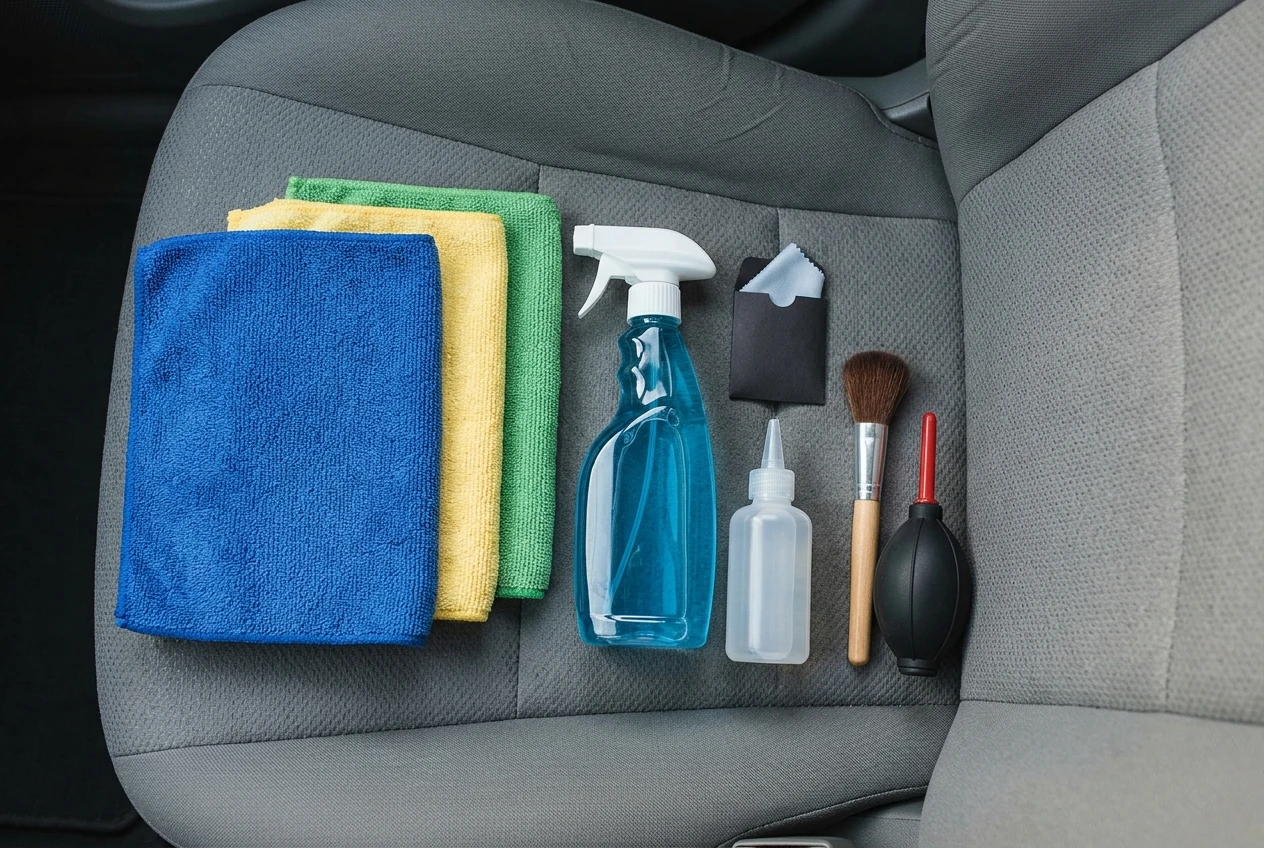
- Three or more microfiber cloths. Keep one for glass, one for the lens and one for the dashboard, so residue from one job never reaches the next.
- An ammonia-free glass cleaner. Check the label, since ammonia is the ingredient to avoid on tinted or coated glass and near dash plastics.
- Distilled water. It dries without the mineral spots tap water can leave, and it is useful for damp-wiping the inside of the glass.
- A lens cleaning cloth or lens wipes. These are made for coated optics, which is what a dash cam lens is.
- A soft brush or air blower. It removes loose grit before any cloth touches the lens, so the grit cannot scratch the surface.
A cotton swab is optional, and handy for the narrow gap between the camera body and the glass.
How do you clean the inside of the windshield without leaving a haze?
Use a barely damp microfiber cloth and finish with a dry one, because the haze comes from leftover cleaner and oily film, not from dirt. The inside of the windshield collects a film from the plastics in the cabin, from skin contact and from your breath. Wiping with too much liquid just spreads that film around.
Follow this sequence:
- Turn the dash cam off and unplug the power cable. If the mount is a suction cup or adhesive pad, leave it in place.
- Spray a small amount of ammonia-free glass cleaner onto a microfiber cloth, not onto the glass. Overspray lands on the dashboard and the camera.
- Wipe the glass in one direction, such as side to side, with overlapping strokes.
- Go over it with a second, dry microfiber cloth in the opposite direction, so any streak shows which pass left it.
- Clean the patch of glass behind and around the camera by reaching in with a cloth wrapped around a finger or a cotton swab.
- Check the result with the sun low or with a flashlight, since streaks that are invisible at noon appear at dusk.
If the haze comes back within days, the source is probably the dashboard, covered below.
What is the safest way to clean a dash cam lens?
Blow off loose dust first, then wipe gently with a dry lens cloth, and only add moisture if a smudge remains. The lens has a coating that is easier to scratch than window glass, so pressure and grit do the most damage.
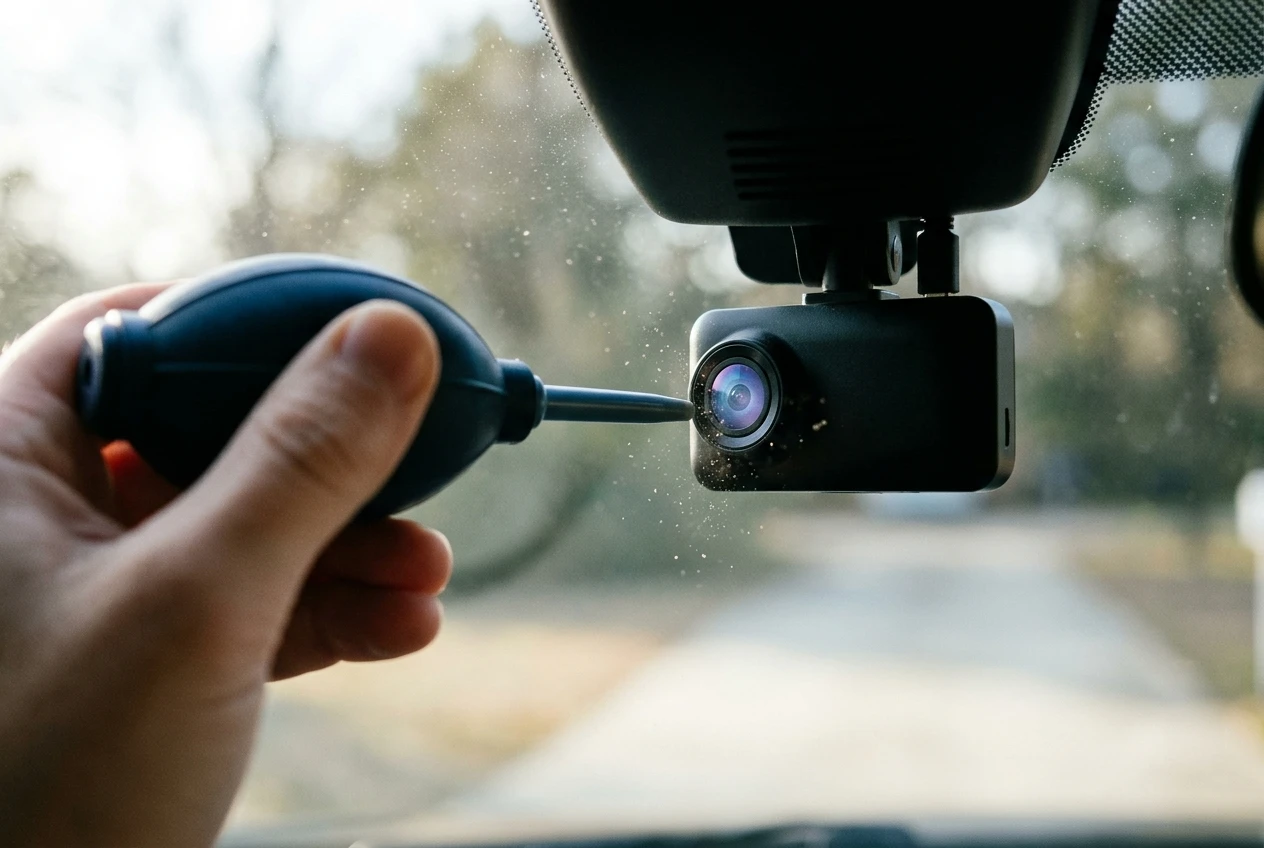
Start with the blower or soft brush to lift dust and sand-like particles. Then use a clean lens cloth in light circles from the center outward. For a fingerprint or oily smudge, put a tiny amount of lens cleaning solution on the cloth, never on the lens, and wipe once or twice.
Check your camera’s manual before using alcohol-based wipes, since some manufacturers recommend them and others advise against it. If the manual says nothing, lens-specific wipes are the safer choice. Let the lens dry for a minute before you power the camera back on.
Which dashboard and interior cleaners cause glare or fogging on camera?
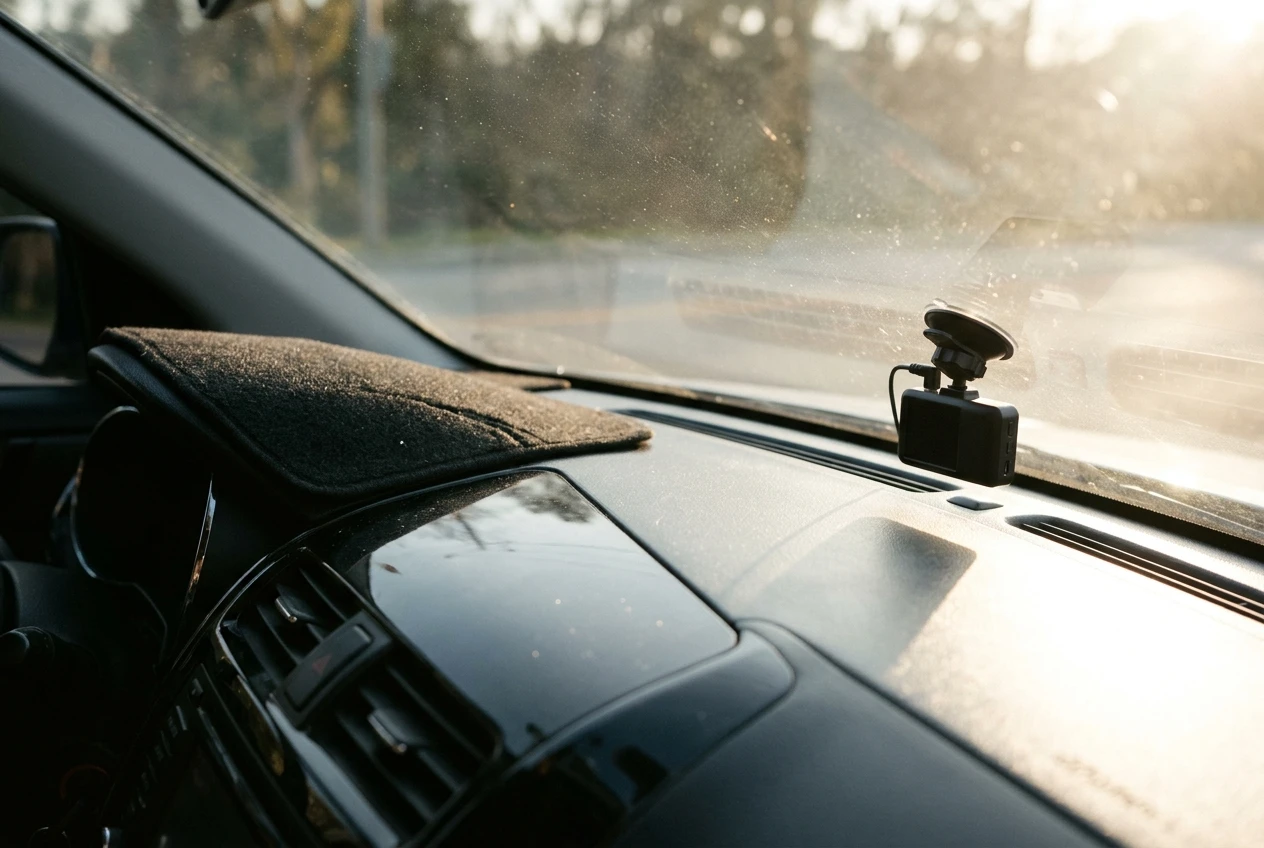
Glossy, silicone-heavy dashboard dressings and aerosol interior sprays are the usual cause, because they leave a film that reflects sunlight onto the windshield. The camera records that reflection as a bright, hazy patch across the bottom of the frame.
Watch for these products:
Product type Why it causes trouble Better choice Shiny dashboard protectant or dressing Leaves a glossy surface that mirrors in the glass A matte or low-sheen interior cleaner Aerosol interior spray Mist drifts onto the glass and lens A cleaner sprayed onto a cloth Scented air-freshener sprays Leave an oily residue on glass A clip-on freshener kept away from the camera Heavy vinyl conditioners Can film over the windshield when the cabin heats up A damp microfiber wipe, then a light matte finish
If you keep a shiny dashboard, a dark non-reflective dash mat or a hood around the camera reduces glare. Apply any dressing with a cloth, keep it away from the base of the windshield, and wipe the glass afterward.
What should you never use near a dash cam?
Avoid ammonia cleaners, paper towels, abrasive pads and any spray aimed at the camera. Each one has a specific way of causing harm.
- Ammonia-based glass cleaners. They can damage window tint and dry out or discolor dashboard plastics and rubber seals around the camera. They also give off fumes in a closed cabin.
- Paper towels and tissues. The fibers are rougher than they feel and can leave fine scratches on a lens coating, plus lint on the glass.
- Household sprays aimed at the lens. Liquid can run into the gap around the lens and the camera body, where it cannot be wiped out.
- Abrasive pads, magic erasers and scouring powder. They scratch glass and lens coatings permanently.
- Dirty or reused cloths. A cloth that cleaned the dashboard carries dressing residue onto the glass.
- Hot water or steam directly on the camera. Heat and moisture can get inside the housing.
Do not clean a camera that is powered on or hot from sitting in the sun. Let it cool first, since cleaner dries unevenly on warm surfaces.
How often should you clean the glass and lens?
Wipe the lens with a dry cloth every week or two, and clean the inside of the windshield every month, or sooner when you see haze. The right interval depends on how you drive, so use the footage as your guide.
Clean more often if you:
- Drive on dusty or unpaved roads
- Smoke or vape in the car, which leaves a sticky film on glass
- Use a dashboard dressing or air freshener
- Park outdoors in strong heat, which pushes more residue out of cabin plastics
- Notice halos around lights or a soft, milky look in daytime clips
A quick check helps: play back a short clip and look at the bottom corners of the frame and at any bright light in the shot. If lights bloom or smear, the glass or lens is the first thing to wipe. Clean the outside of the windshield as well, since a dirty exterior also reduces clarity and the wipers cannot reach everything.
Which supplies should live in your glovebox?
Keep a small, sealed pouch with two microfiber cloths, a lens cloth or a few lens wipes, and a small bottle of ammonia-free glass cleaner. That is enough for a two-minute fix whenever the footage or the view looks off.
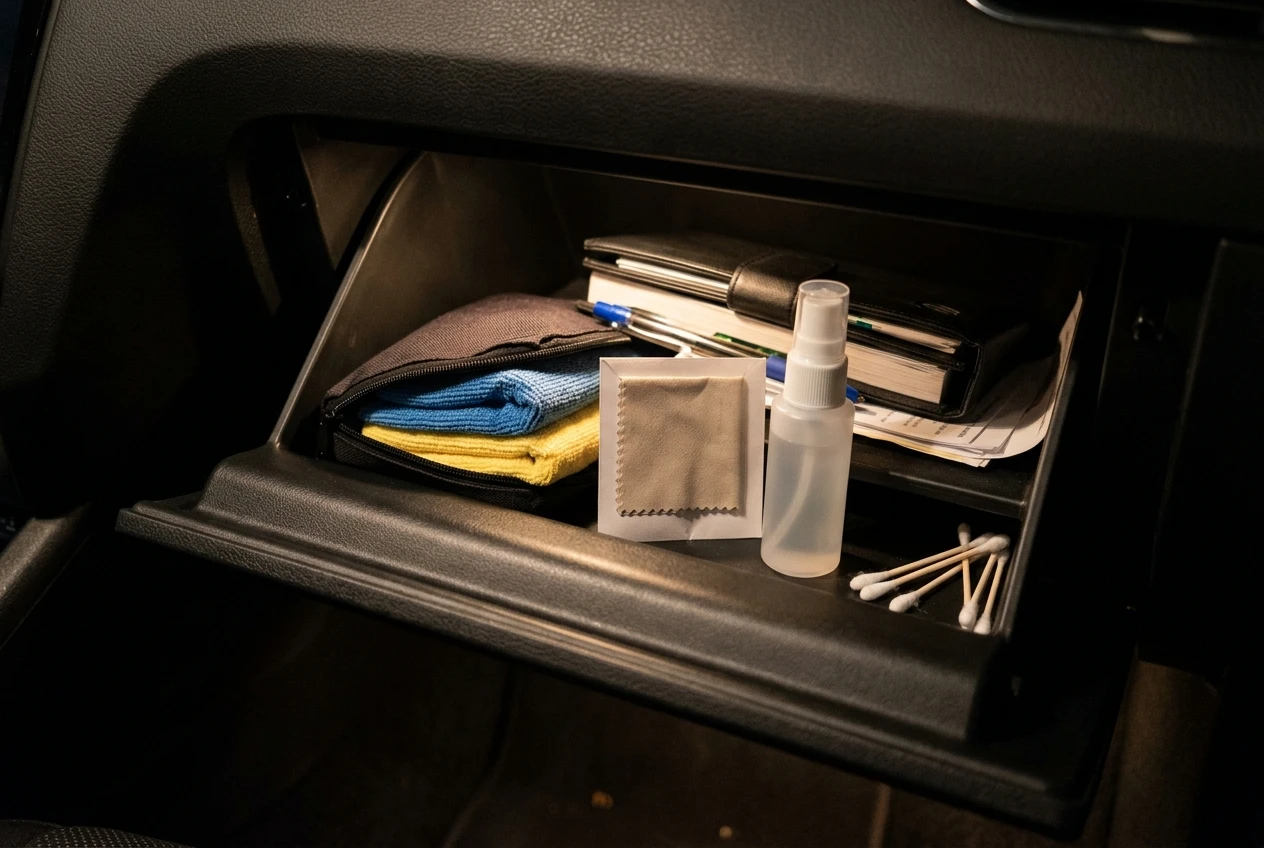
A sensible glovebox pouch holds:
- One cloth for glass and one for the dashboard, kept in separate bags
- A lens cloth stored in its own sleeve so it stays free of dust
- A small blower or soft brush
- A bottle of glass cleaner in a size that fits without leaking
- A few cotton swabs for the edges of the mount and camera
Wash the microfiber cloths regularly without fabric softener, which coats the fibers and leaves streaks. Store the pouch out of direct sun, because heat can degrade the cleaner bottle and the cloths.
Pair this kit with the rest of your setup: read The Essential Dash Cam Accessories: Must-Haves For Every Driver.