

Do dash cams lower insurance premiums? Sometimes, but not reliably. A few insurers offer a discount or a camera-based program, many offer nothing, and the answer depends on your insurer, your policy and where you live. Confirm it with your insurer before you buy. The more dependable value is footage that settles a disputed claim.
Do dash cams lower your insurance premiums?
No general rule says they do. Premiums come from each insurer’s own pricing, and a dash cam lowers yours only if your insurer has written that into its rates or a specific program. Many policies never mention cameras at all.
Online claims that a dash cam “cuts your premium” usually come from a camera maker’s marketing or from a single insurer’s offer in one market. Neither tells you what your insurer will do. The only source that applies to you is your own insurer, and the questions further down are written for that conversation.
It also helps to separate a dash cam discount from a telematics or usage-based program. Telematics programs price your policy from driving data collected by an app or a plug-in device, and a dash cam is a different product. A discount for one does not imply a discount for the other.
Why might an insurer offer a dash cam discount, and why might it not?
An insurer might offer a discount when it expects the camera to save it money on claims. It might decline when it cannot show that a camera changes how likely you are to crash or how much a crash costs.
Reasons an insurer could see value:
- Footage can show who was at fault, which shortens claim investigations.
- Clear video can expose staged or exaggerated claims.
- Drivers who know they are being recorded may drive more carefully, though this varies from person to person.
- Footage can help the insurer recover its costs from an at-fault driver’s insurer.
Reasons an insurer may offer nothing:
- A camera records a crash but does not prevent one, so the underlying risk stays the same.
- Footage is just as likely to show the policyholder at fault.
- Checking that a camera is installed and working adds administrative cost.
- Rating rules in some places limit what an insurer can discount for.
- The insurer may simply not have built a dash cam factor into its pricing.
Both lists are possibilities, not findings. Your insurer’s position could sit anywhere between them, which is why you ask instead of assuming.
How can a dash cam save you money even without a discount?
A dash cam saves money by helping you prove what happened when fault is disputed. Fault usually decides who pays for repairs, whether you pay your excess or deductible, and whether your premium rises at renewal after an at-fault claim.
Without footage, a disputed collision often comes down to two accounts, the damage on both cars and any witnesses. With clear, time-stamped video, the sequence of events is on record. That can support an honest account, speed up a settlement and reduce the chance that you take blame you do not deserve.
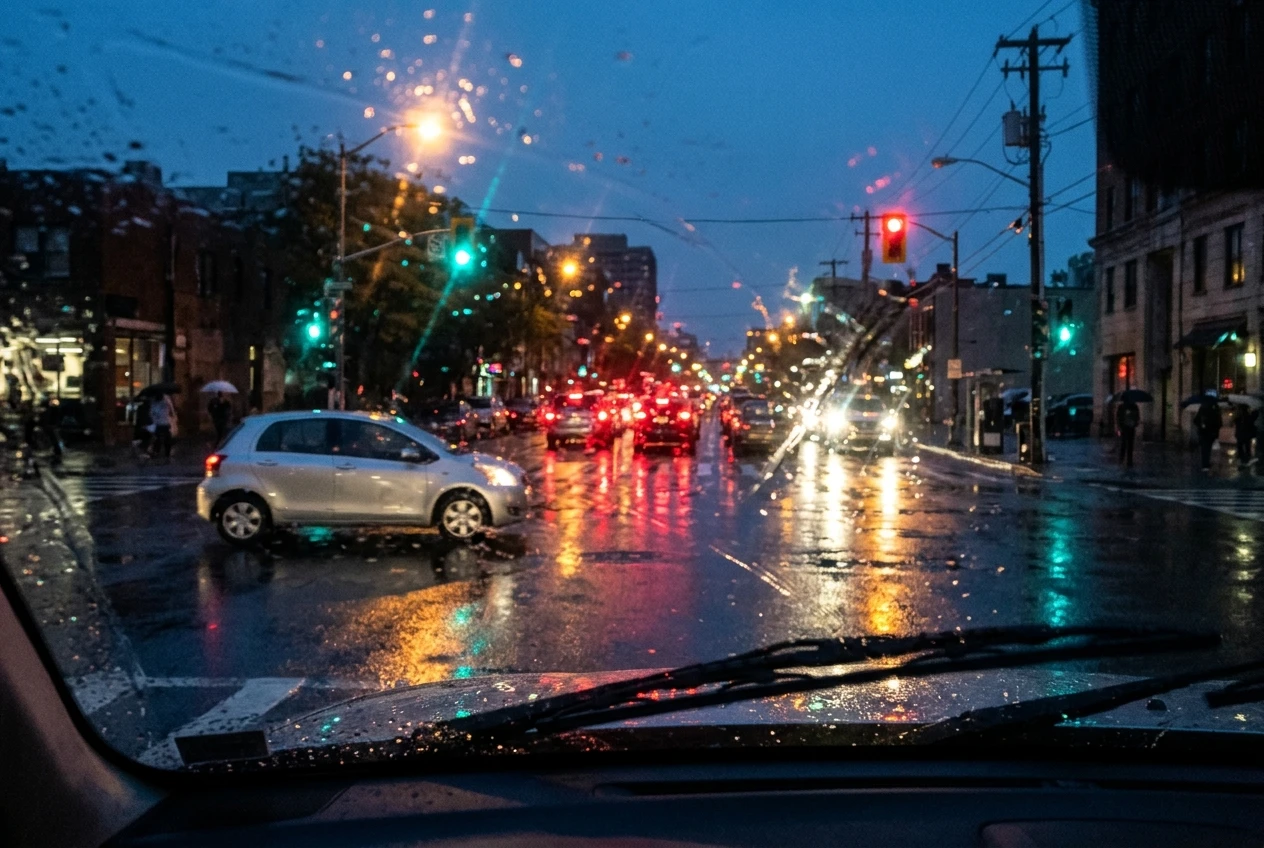
Here is how outcomes can differ in common situations:
Situation | Without footage | With clear footage |
|---|---|---|
Two drivers give conflicting accounts at a junction | Fault may be decided from statements and damage patterns | The video shows the sequence and may support your account |
Another driver hits your parked car and leaves | Little to identify them | A plate or vehicle may be visible, if the camera was recording |
A claim looks staged or exaggerated | Your word against theirs | The video shows what actually happened |
You were at fault | The outcome is the same, and you may dispute it unsuccessfully | The footage confirms it, and you know before arguing |
A premium discount | Depends on your insurer | Depends on your insurer, and the camera alone does not guarantee one |
Two conditions apply to every row in the middle column. The footage has to be clear enough to read plates and signals, and it has to be saved before it is overwritten. If you want coverage while parked, how a camera behaves with the engine off matters, and dash cam parking mode explains what that demands of your battery.
What should you ask your insurer before you buy a dash cam?

Ask your insurer directly, and ask for the answers in writing. These questions cover the ground in a sensible order:
- Do you offer a discount or reduced rate for owning or using a dash cam, and does it apply to my policy?
- If there is a discount, how large is it, and does it carry over at renewal?
- Does the camera need to be a particular brand, model or specification?
- Must it be professionally installed or hardwired, and what proof do I need to give, such as an invoice or receipt?
- Do you accept dash cam footage as part of a claim, and in what format and by what deadline do I need to submit it?
- Will I have to hand over the whole recording or only the clip showing the incident?
- Does fitting a dash cam count as a modification I must declare on my policy?
- Do you run a telematics or usage-based program, and how does it differ from a dash cam discount?
Write down who answered, the date and what they said. If the insurer promises a discount, ask for the terms in an email or in your policy documents. A verbal “yes” from a phone agent is weak evidence if the discount is missing at renewal.
Does the type of dash cam or the way it is installed matter to an insurer?
It can, but only if your insurer sets requirements. Some programs may specify a camera type or an installation method, while others ask for neither. Question 3 and question 4 above tell you which applies to you.
For evidence, the camera itself matters more than any discount rules. A camera is only useful in a dispute if its footage is usable, and these features decide that:
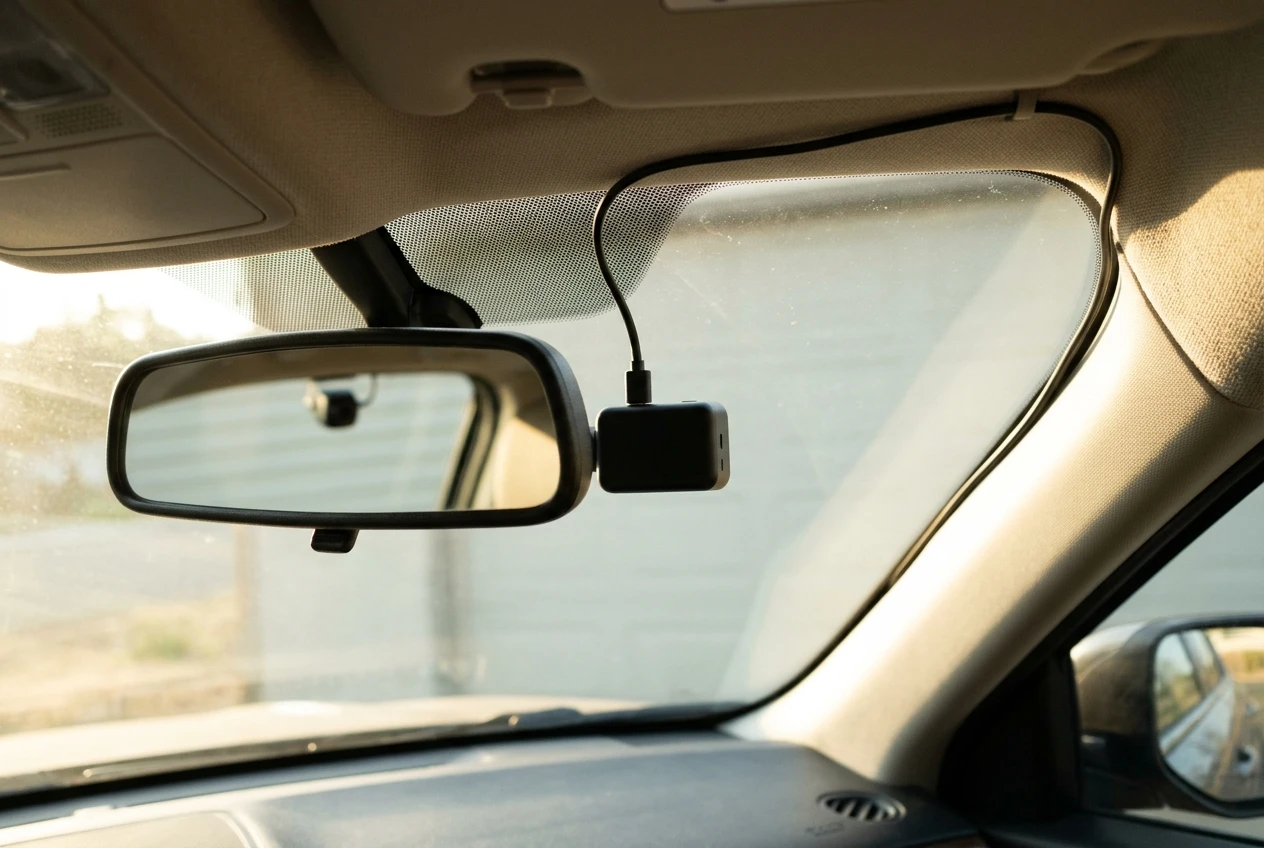
- Resolution and lens quality: plates and traffic signals need to be legible, including at night.
- Accurate date and time: a wrong timestamp makes the footage harder to rely on.
- A rear camera: rear-end collisions happen behind you, and a front-only camera will not record them.
- Storage and loop recording: the memory card must have room, and the camera should protect the clip of an incident from being overwritten.
- Reliable power: a camera that loses power or shuts off records nothing.
Installation affects reliability too. Hardwiring can supply steady power and enable recording while parked, though it adds its own trade-offs, which the pros and cons of dash cam hardwire kits covers. If your insurer asks for professional installation, keep the invoice.
Could dash cam footage ever work against you?
Yes. A dash cam records what happened, and that includes your own mistakes: speeding, running a light, drifting out of your lane or looking at a phone. If you give footage to your insurer or it is requested in a claim, it can show you at fault.
Some practical points follow from that:
- Do not delete or edit footage after an incident. Missing or altered clips can damage your credibility and may breach your policy’s duty to cooperate.
- Do not hand over only the clips that favor you if the insurer has asked for the full recording.
- Rules on recording audio, filming in public and using footage vary by country and region. Check your local rules, especially if passengers are in the car.
- Ask your insurer how they treat footage that shows shared fault.
Knowing your own driving is on the record is not a reason to skip the camera. It is a reason to understand the position you are in before you rely on footage.
Is a dash cam still worth buying if no discount is offered?
It is worth buying if you value having evidence of what happens on the road, and you should judge it on that basis instead of on a possible discount. A discount, if you get one, is an extra.
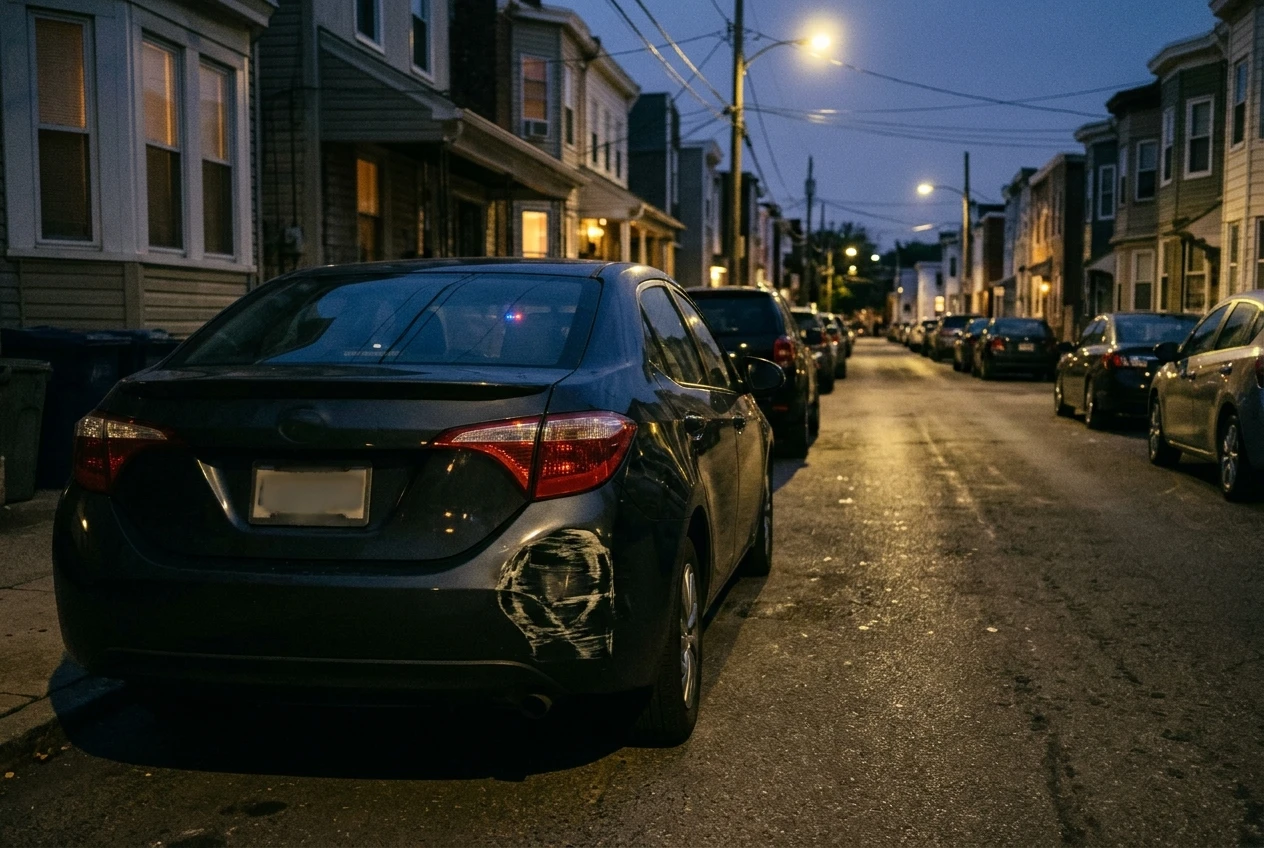
A few questions help you decide:
- How large is your excess or deductible? A disputed claim could cost you that amount plus any premium rise, which you can compare with the price of a camera.
- Do you park on streets or in lots where your car could be hit while you are away? If so, parking coverage and reliable power matter more.
- Do you drive often in dense traffic or on routes where collisions and sudden stops are common? A rear channel may be worth the extra cost.
- Do you want to review your own driving? Using dash cams for defensive driving covers how footage can show habits you want to change.
If your insurer confirms a discount, count it as a saving on top of those benefits. If it offers none, a dash cam still earns its place when its footage is clear, saved in time and handed over honestly.